Safe Work Method Statements (SWMS) in New Zealand – What the Law Actually Requires
Safe Work Method Statements (SWMS) are not explicitly required by law in New Zealand, but the outcomes they are often used to achieve absolutely are.
Under the Health and Safety at Work Act 2015 (HSWA) and supporting regulations, PCBUs must identify risks, implement controls using the hierarchy of controls, and ensure workers understand how work is to be done safely.
A SWMS can be one way of meeting those obligations – but it is not a legal substitute for proper risk management, nor is it mandated in the same way as in Australia.
This distinction matters, and misunderstanding it is where many businesses get into trouble.
Are SWMS a Legal Requirement in New Zealand?
No – SWMS are not specifically mandated under HSWA or its regulations.
However, PCBUs must:
Identify reasonably foreseeable risks
Eliminate risks where practicable
Minimise remaining risks using effective controls
Ensure workers understand how to carry out work safely
Review controls when conditions change
WorkSafe guidance makes it clear that documents are not the goal – effective risk management is.
SWMS may be used as an administrative tool to support these duties, particularly for complex or high-risk work, but relying on a SWMS alone does not meet legal obligations.
What Does A SWMS Look Like?
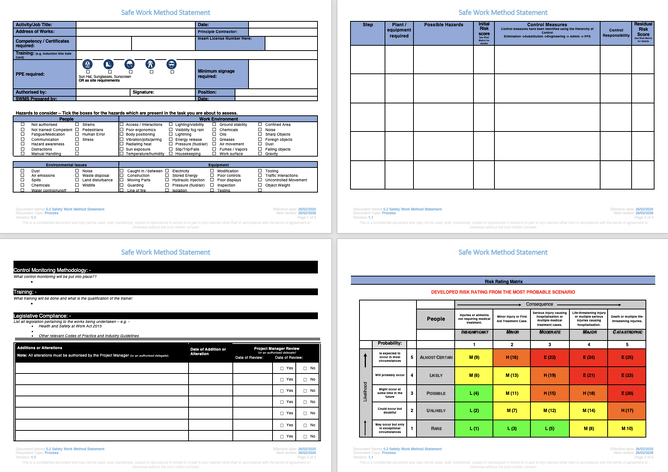
What Is a Safe Work Method Statement (SWMS)?
A Safe Work Method Statement (SWMS) is a task-based document that typically:
Describes a specific work activity
Identifies hazards associated with that task
Outlines control measures to manage those risks
Communicates how work should be carried out safely
In New Zealand, SWMS are most commonly used in construction and infrastructure work, particularly where contractors are familiar with Australian systems or client-driven requirements.
Importantly, a SWMS is classified as an administrative control under the hierarchy of controls – it does not replace higher-order controls such as elimination, isolation, or engineering.
Why SWMS Are Commonly Used for High-Risk Work
Although not legally required, SWMS are often used to support work involving:
Working at height
Excavations and trenches
Powered mobile plant
Confined spaces
Work near live services or traffic
Complex sequencing or contractor interfaces
In these situations, a SWMS can help communicate risk controls clearly, particularly where multiple parties are involved.
That said, WorkSafe does not recognise SWMS as a standalone compliance document.
SWMS vs NZ Legal Requirements – The Critical Difference
This is where many businesses get it wrong.
Under NZ law, PCBUs must ensure:
Risks are assessed in context
Controls are selected using the hierarchy of controls
Workers are trained and supervised
Controls are monitored and reviewed
WorkSafe guidance emphasises that generic or templated SWMS are often ineffective, especially when:
Site conditions change
Work methods vary
Infrastructure is modified
New hazards are introduced
If a SWMS exists but does not reflect how work is actually done, it offers little protection during an investigation.
What WorkSafe Expects Instead of “Just a SWMS”
What WorkSafe Expects Instead of “Just a SWMS”
WorkSafe NZ guidance aligns risk management with:
Task-specific risk assessment
Practical control selection
Worker engagement
Ongoing review
In practice, this often looks like:
A task risk assessment (TRA/JSA/TA)
Site-specific control planning
Clear work instructions
Toolbox discussions
Supervisor verification
Review when conditions change
A SWMS may form part of this system, but it is not the system itself.
Key Elements of an Effective SWMS (If You Use One)
If your organisation chooses to use SWMS, WorkSafe-aligned best practice includes:
Clear description of the specific task
Hazards linked to the actual site and conditions
Controls prioritised using the hierarchy of controls
Defined responsibilities for implementation
Evidence that workers understand the controls
Review triggers when work conditions change
Overly detailed, generic, or “tick-box” SWMS often create false confidence rather than real safety.
Who Should Be Involved in Preparing a SWMS?
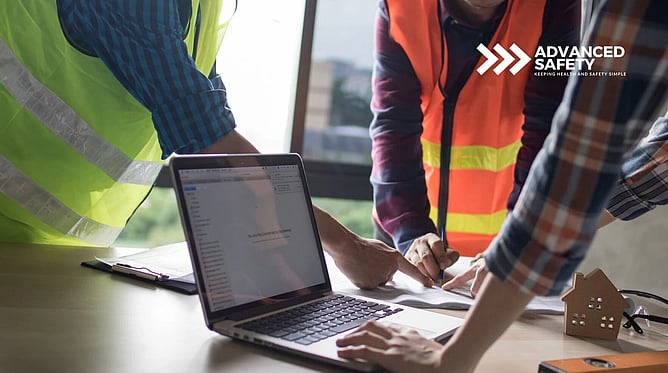
An effective SWMS should never be written in isolation.
Best practice involves:
The PCBU responsible for the work
Workers performing the task
Supervisors overseeing the activity
Health and Safety Representatives (where applicable)
Worker involvement is particularly important – not as consultation theatre, but to ensure controls are practical and workable.
Implementing a SWMS Properly
A SWMS only adds value if it is actively used.
That means:
Workers understand it before work starts
Supervisors verify controls are in place
Conditions are checked continuously
Work stops if controls are no longer effective
The document is reviewed when circumstances change
A SWMS sitting in a folder or prequal portal offers no legal protection.
Can a Generic SWMS Be Used?
Only as a starting point – never as the final control.
Generic SWMS often fail because they:
Miss site-specific hazards
Assume conditions that don’t exist
Over-rely on PPE
Ignore sequencing or interfaces
WorkSafe has repeatedly highlighted that generic documents do not meet the “reasonably practicable” test if risks are foreseeable.
Final Word on SWMS in New Zealand
Safe Work Method Statements are not legally required in New Zealand – but effective risk management absolutely is.
A SWMS can support that process when:
It reflects real work
It prioritises higher-order controls
It is actively implemented and reviewed
But no document will compensate for:
Poor risk assessment
Outdated controls
Unchecked assumptions
Lack of supervision
If you are unsure whether your current approach genuinely meets HSWA expectations – particularly for high-risk or changing work – this is where an independent, under-the-hood review adds real value.