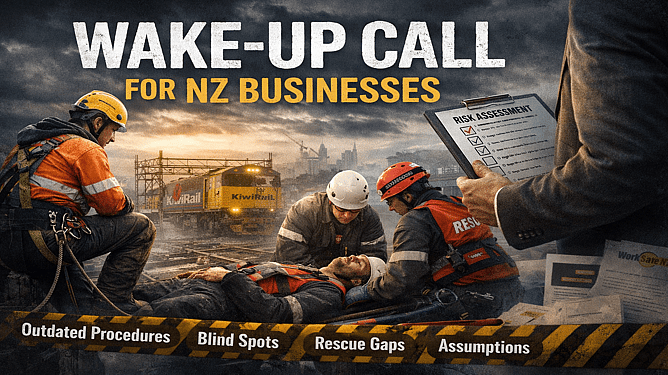
The KiwiRail prosecution shows that when infrastructure changes, existing safety procedures may no longer be adequate. WorkSafe expects businesses to reassess risk, apply the hierarchy of controls properly, and verify rescue plans in real conditions - not rely on assumptions or legacy documentation.
The KiwiRail prosecution concluded by WorkSafe NZ is a case every New Zealand business leader should understand – not because it involved reckless behaviour, but because it involved competent people, routine work and assumptions that no longer held true.
This is exactly where many serious and life-altering workplace incidents occur.
The prosecution is not a rail safety story. It is a risk management story, and its lessons apply far beyond the rail sector – to construction, manufacturing, logistics, utilities, property, retail, agriculture, events and professional services.
What Happened in the KiwiRail Prosecution – In Plain Terms
A KiwiRail worker suffered life-changing injuries after falling approximately 10 metres while working at height on newly installed telecommunications infrastructure.
The task itself was familiar. Similar work had been completed many times before.
The critical difference was subtle but decisive – the infrastructure had changed.
KiwiRail introduced a new type of communications pole. While the work appeared routine, the change altered the risk profile. Existing procedures, training, and controls were reused without sufficient challenge or task-specific reassessment.
WorkSafe’s investigation found that:
A detailed, task-specific risk assessment was not completed
Dedicated procedures for the new infrastructure were not developed
Training did not address the specific risks introduced by the change
Safer alternatives such as elevated work platforms were not adequately considered
Fall arrest systems were relied upon without robust, tested rescue arrangements
KiwiRail was fined and ordered to pay reparation. More importantly, a worker’s life was permanently altered.
Why the KiwiRail Prosecution Matters Beyond Rail
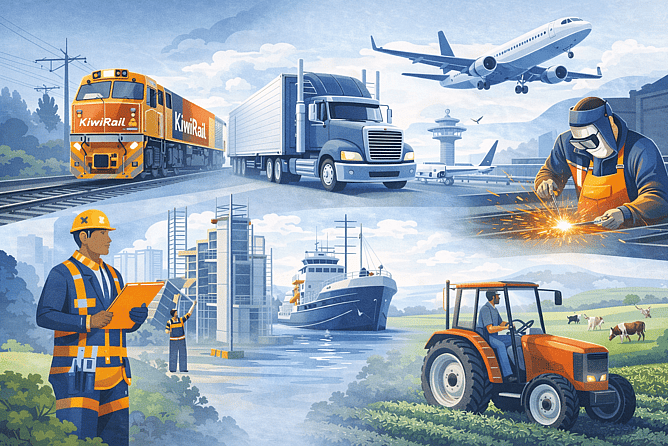
This prosecution is not about rail operations. It is about how organisations manage risk when conditions evolve.
Most serious incidents do not occur during obviously dangerous or unfamiliar work. They occur when:
infrastructure is modified incrementally
work methods remain largely unchanged
legacy procedures are reused without reassessment
training is assumed to still be adequate
emergency and rescue arrangements exist only on paper
If your organisation has:
added new plant, structures, or systems
modified access ways, layouts, or working heights
introduced new equipment into existing environments
relied on contractors to manage change without internal oversight
continued using the same procedures year after year
then the KiwiRail prosecution is directly relevant to you.
What WorkSafe Reinforced Through the KiwiRail Prosecution
WorkSafe’s messaging following the prosecution was deliberate and consistent. Several key themes were reinforced.
Risk Must Be Reassessed When Conditions Change
WorkSafe made it clear that change invalidates assumptions.
Even modest changes to infrastructure, equipment, or layout can render existing controls ineffective.
Statements such as “we’ve always done it this way” or “this task is familiar” offer no protection once the context has changed. Risk assessments must reflect how work is actually performed today, not how it was performed when procedures were originally written.
Incremental change still requires conscious reassessment.
The Hierarchy of Controls Must Be Actively Applied
The prosecution reinforced that fall arrest should not be the default control where safer options are reasonably practicable.
WorkSafe expects organisations to actively consider whether work can be:
eliminated
completed from ground level
undertaken using elevated work platforms or scaffolding
Fall arrest systems sit lower in the hierarchy and should not be relied on as the primary control where higher-order controls are available.
This expectation aligns directly with HSWA 2015 and current WorkSafe guidance.
Learn more about the hierarchy of controls.
Training Must Be Specific, Current and Task-Relevant
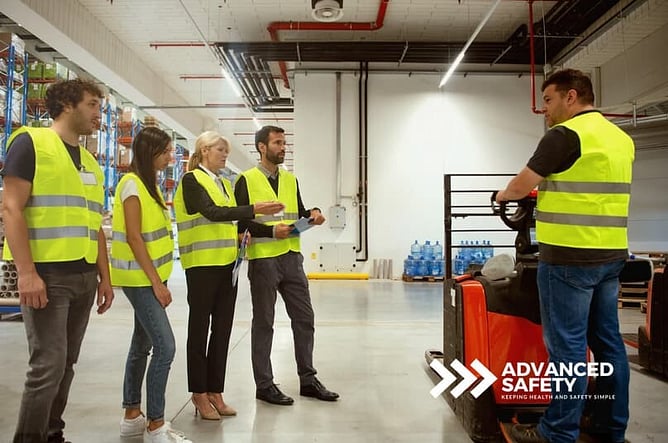
Experience is not the same as competence in changed conditions.
In the KiwiRail case, the worker was experienced. However, the risks introduced by the new infrastructure were not specifically addressed through refreshed training or task-specific instruction.
WorkSafe reinforced that training must:
address the actual task being performed
reflect current conditions
be refreshed when work methods or environments change
Generic or legacy training is increasingly difficult to defend.
Rescue Planning Must Work in Reality, Not Just on Paper
One of the most uncomfortable truths in work-at-height incidents is that many rescue plans are theoretical.
WorkSafe expects organisations to demonstrate they can:
rescue an injured or suspended worker promptly
do so without relying solely on emergency services
execute the plan in real conditions, not just in documentation
If your rescue plan effectively amounts to “call 111 and wait”, that represents a serious and defensible gap.
Enforcement Focuses on System Failures, Not One-Off Decisions
This prosecution was not about a single error on the day.
It focused on systemic weaknesses, including:
procedures that no longer reflected reality
assumptions that were never tested
controls that were not verified
risks that were not reassessed following change
This is how WorkSafe now frames accountability under HSWA.
The Uncomfortable Questions for Business Leaders

If WorkSafe reviewed your organisation tomorrow, could you confidently answer:
How do you know your procedures still match real-world practice?
When was your last task-specific risk reassessment?
What has changed since your procedures were written?
How do you verify that controls actually work?
How would you rescue someone in a worst-case scenario?
Many organisations are doing more than they realise. Many also have blind spots that only become visible after an incident.
Why Under-the-Hood Reviews Matter
Most compliance gaps are not obvious.
Policies exist.
Training records exist.
Risk registers exist.
The gaps sit underneath:
where documentation no longer reflects practice
where incremental change has gone unnoticed
where controls rely heavily on individual behaviour
where emergency arrangements have never been stress-tested
This is where incidents occur – and where enforcement action typically lands.
Learning Early Versus Learning the Hard Way
The KiwiRail prosecution is not about blame. It is about learning early rather than learning the hard way.
For many New Zealand businesses, this case will feel uncomfortably familiar. That discomfort is useful. It creates an opportunity to pause, reassess, and strengthen systems before an incident forces the issue.
Strong safety performance is rarely about doing more. It is about ensuring that what you already have still works in the environment you operate in today.
Looking under the hood is often where the most valuable insights sit.