Health and Safety Consultant in New Zealand: When You Need One and What to Expect
A health and safety consultant helps New Zealand businesses understand risk, meet HSWA duties, and build practical systems that actually work in real operations. The right consultant does more than write documents – they reduce uncertainty, strengthen decision-making, and help businesses stay ahead of enforcement and prequalification pressure.
What Does a Health and Safety Consultant Do in New Zealand?
A health and safety consultant supports PCBUs to identify risk, meet legal duties under the Health and Safety at Work Act 2015, and implement controls that reflect how work is actually done.
At a practical level, a competent consultant helps businesses:
interpret HSWA duties in context
assess risk in changing environments
design systems that align with the hierarchy of control
prepare for WorkSafe scrutiny and enforcement
demonstrate capability for prequalification and tenders
This role is not about paperwork for its own sake. It is about reducing uncertainty and helping leaders make defensible decisions.
When Do Businesses Typically Need a Health and Safety Consultant?
Health and Safety Consultant support after change
Most organisations engage a health and safety consultant after something changes:
new plant, equipment, or infrastructure
growth into new services or regions
contractor engagement or supply chain pressure
incidents, near misses, or enforcement attention
Change is where assumptions fail. Consultants help reassess risk before it becomes visible through harm.
Health and Safety Consultant support for prequalification and tenders
Prequalification schemes such as Totika, SiteWise, and IMPAC require evidence, not intent. Consultants help translate existing practices into assessor-ready frameworks and close gaps before work is blocked.
Why Many Health and Safety Systems Fail Without Independent Review

Many systems fail not because people do not care, but because:
documentation no longer matches reality
controls rely too heavily on behaviour
risk assessments are reused after conditions change
emergency and rescue plans are untested
A health and safety consultant provides external perspective. This is often where blind spots are identified.
The PCBU Role and Why Consultant Advice Matters
Health and Safety Consultant guidance for PCBUs
Under HSWA, the PCBU holds primary duty of care. That duty cannot be delegated.
Consultants help PCBUs:
understand what “reasonably practicable” means in their context
prioritise controls using the hierarchy of control
demonstrate due diligence
Applying the Hierarchy of Control in Real Workplaces
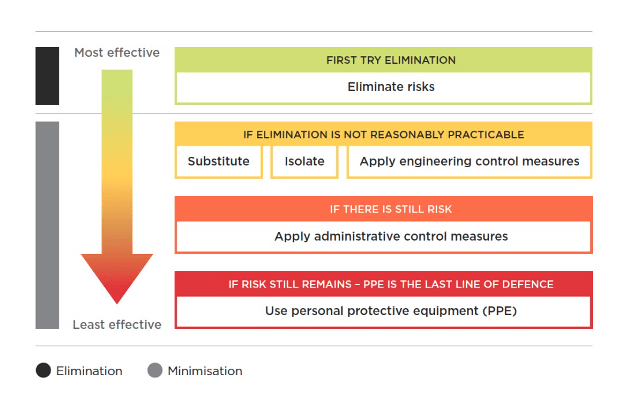
Health and Safety Consultant insight on hierarchy of control
The hierarchy of control is not theoretical. WorkSafe expects businesses to actively apply it when managing risk.
Consultants help determine:
when elimination is reasonably practicable
when isolation or engineering controls are required
when administrative controls or PPE are insufficient on their own
Why Prequalification Pressure Is Increasing
Health and Safety Consultant support for contractor prequal
Clients now use prequalification to manage upstream risk.
Failing prequalification blocks work because:
unmanaged risk transfers liability
weak systems expose clients to enforcement
assurance must exist before contracts are awarded
Consultants help businesses understand what assessors actually look for and avoid over-documentation.
What WorkSafe Prosecutions Tell Us About System Failure
Health and Safety Consultant lessons from enforcement
Recent prosecutions, including KiwiRail, show enforcement focuses on system failure, not intent.
Common findings include:
failure to reassess risk after change
reliance on legacy procedures
inadequate application of the hierarchy of control
Consultants help organisations learn early rather than after harm occurs.
How Advanced Safety Approaches Health and Safety Consulting Differently
Performance-based health and safety consulting
Advanced Safety focuses on under-the-hood system performance, not surface compliance.
Our approach includes:
diagnostic reviews aligned to ISO 45001
practical risk assessments linked to real work
decision-ready advice for leaders
support through enforcement, prequalification, and growth
This is not about creating more documents. It is about confidence and clarity.
Frequently Asked Questions About Health and Safety Consultants
What industries use a health and safety consultant?
Construction, manufacturing, transport, rail, logistics, agriculture, retail, and professional services.
Do small businesses need a health and safety consultant?
Yes – particularly when change, contractors, or higher-risk work is involved.
Can a consultant guarantee compliance?
No consultant can remove all risk. A good consultant helps you make defensible decisions and reduce uncertainty.
When to Engage a Health and Safety Consultant
f you are unsure whether your systems reflect reality, whether your controls are still effective, or whether you are genuinely ready for scrutiny, that uncertainty is the signal.
Strong safety performance is not about doing more. It is about ensuring what you have still works.
Speak with Advanced Safety to discuss whether independent review would strengthen your position.