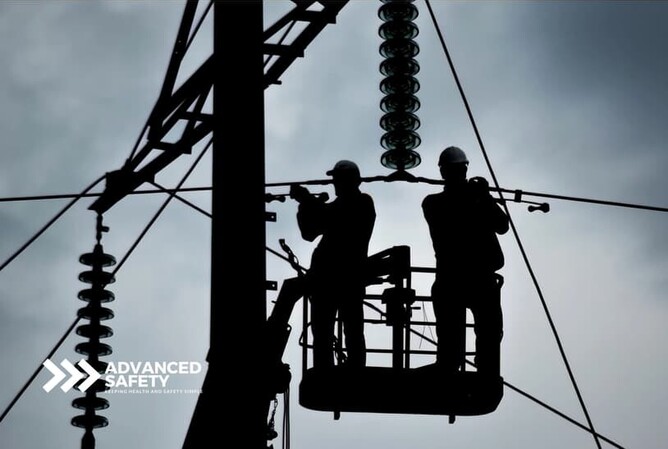
Learning from Mistakes: Critical Lessons in Overhead Power Line Safety
Overhead power line safety comes down to planning the job before any person, machine or load gets near the lines. It's a legal duty under the Health and Safety at Work Act 2015 and the cases below show what it costs when that planning doesn't happen.
WorkSafe has prosecuted a steady run of businesses over contact with overhead lines, from a forestry site in Rotorua to a house on Waiheke Island. In each of the three cases below the workers were doing an ordinary job when the line came into it.
Case 1: Mike Harris Earthmoving Limited
Mike Harris Earthmoving Limited, a logging company, was fined $100,000 in the Rotorua District Court and ordered to pay $21,442 in reparation on top of $23,558 it had already paid, as WorkSafe reported in July 2020. In November 2018 the crane on its forwarder stopped working and the machine was moved to another part of the site for repairs, close enough to live lines for electricity to pass through it. A worker holding a rail on its side suffered deep burns to his foot and hand and lost two toes. WorkSafe found the company had no designated repair area and the work shouldn't have gone ahead near live lines without first considering the risk.
Key Lessons
- Assess the risk from overhead lines before any work starts, including repairs and other unplanned jobs that move plant somewhere new.
- Make sure everyone on site knows where the lines are and which areas are off limits for plant.
- Use controls such as barriers, a designated repair or laydown area well clear of the lines and a spotter whose only job is watching the clearance.
Case 2: Joan Carpenters Limited and Church Bay Services Limited
Joan Carpenters Limited and Church Bay Services Limited were sentenced in the Auckland District Court on 12 December 2024 after a worker on a Waiheke Island house was shocked by an 11kV line in May 2023. The scaffold had been put up between 1.5 and 1.9 metres from the lines. As he turned a 5.6 metre length of cladding its top end touched a line, he lost consciousness and fell about 3.7 metres through a gap in the scaffold, suffering serious injuries. The two companies were fined $30,000 between them and ordered to pay $42,818 in reparation. WorkSafe found there was no close approach consent for the work and no proper risk assessment.
Key Lessons
- Keep people, plant and anything they're carrying at the minimum approach distances in the New Zealand Electrical Code of Practice for Electrical Safe Distances (NZECP 34). Long materials like cladding, pipe and scaffold tube count too.
- Brief every crew on the lines at that particular site before work starts, not only in a general electrical safety session months earlier.
- Plan for the worst case, including how you'd reach and treat someone who has been shocked or has fallen without anyone else coming into contact with anything live.
Case 3: Dimac Contractors Limited
Dimac Contractors Limited was fined $90,000 in November 2017 after its digger struck a power line while clearing topsoil on a development site in Upper Hutt. The pole snapped, the line tangled in the digger and another worker later cut it free. The property developer had said the lines were probably dead but should be treated as live, the contractor assumed they were off and they weren't. Nobody was hurt, however WorkSafe found the company hadn't identified the electrical hazard, tested the lines, kept a safe distance or restricted access to the fallen line.
Key Lessons
- Site planning should find every line on and around the site and confirm with the line owner whether each one is live.
- Treat every line as live until the line owner confirms otherwise and never let a worker cut or move a fallen line.
- Fence off the area under and around the lines and put up warning signs wherever plant could stray into them.
WorkSafe’s Call to Action on Power Lines
In light of these incidents, WorkSafe New Zealand is urging all businesses to:
- Identify every overhead power line before work starts, as part of a site risk assessment that maps where plant, people and materials will move.
- Keep mobile plant and any load it carries at least 4 metres from live overhead lines, as NZECP 34 requires, unless the line owner has given written consent for a reduced distance. WorkSafe recommends 6 metres from transmission lines.
- Put controls in place such as physical barriers, warning signs and a competent spotter whose only job is watching the clearance.
How Advanced Safety Can Help
Advanced Safety works with businesses that want an independent view of how they manage critical risks like overhead lines. That work includes:
- Comprehensive Assessments: We identify hazards and check how the work is actually done against the law and codes of practice like NZECP 34.
- Health and Safety Management Systems: Tailored systems that integrate safety into your daily operations.
- In-House Support and Training: Workshops and training sessions designed to upskill your workforce.
- Incident Investigations: Expert analysis to identify root causes and implement corrective actions.
- Contractor Management Solutions: Streamlined systems to manage contractor compliance and safety.
Why Compliance Matters Around Power Lines
Penalties are the smallest part of what a power line contact costs a business. The worker who takes the shock pays far more and the business can also face:
- Financial Costs: Fines, reparation, legal fees and higher insurance premiums.
- Reputational Damage: Lost trust among workers, clients and the wider community.
- Operational Disruptions: Investigations and corrective actions can halt projects and delay timelines.
Overhead Power Line Safety Starts Before the Job
Mike Harris Earthmoving, Joan Carpenters, Church Bay Services and Dimac Contractors all learned the cost of overhead power line safety the hard way. None of the jobs was unusual: a machine repair, a cladding install and some topsoil clearing. In every case the planning that would have kept people and plant clear of the lines didn't happen before the work started.
Treat Overhead Power Line Safety as a Critical Risk
In Raise the Standard the first element of S.A.F.E.T.Y. is Strategy: being clear about the critical risks a business carries and how much of them it's prepared to accept. For anyone running plant, scaffolding or long materials, overhead lines belong on that short list. One contact is enough to kill.
In each case above the lines were already part of the site and nobody had settled, ahead of the job, how close was too close. A clear strategy settles that before the crew arrives: who checks the site for lines, who talks to the line owner about a close approach consent and who has the authority to stop the job when plant drifts toward the 4 metre limit.
If overhead lines aren't on your critical risk list, it's worth asking why not. If they are, ask who in the business actually owns them.
The free S.A.F.E.T.Y. Leadership Worksheet walks through Strategy and the other five elements. It's a quick way to see whether critical risks like overhead lines have a clear owner in your business.
Frequently Asked Questions About Overhead Power Line Safety
What is the minimum approach distance for overhead power lines in NZ?
Under NZECP 34, the New Zealand Electrical Code of Practice for Electrical Safe Distances, any part of mobile plant or a load it carries must stay at least 4 metres from a live overhead line. That distance can only be reduced with the line owner's written consent and never below the minimums in Table 6 of the code. WorkSafe recommends keeping 6 metres from high-voltage transmission lines.
What is a close approach consent?
A close approach consent is written permission from the owner of an overhead line to work closer than the standard 4 metre minimum approach distance. Under NZECP 34 the consent sets the distance to keep, the section of line it covers and any other conditions for the work. WorkSafe advises against starting work near lines until you've checked whether your local lines company requires one.
Who is responsible for overhead power line safety on a worksite?
Every PCBU involved in the work has a duty to manage the risk so far as is reasonably practicable. Where more than one business shares the site, section 34 of the Health and Safety at Work Act 2015 requires them to consult, cooperate with and coordinate activities with each other. In the Waiheke Island case both companies involved were convicted and fined.
About the Author

Matt Jones is the founder of Advanced Safety and a HASANZ-registered health and safety consultant. He's a Professional Member of NZISM and holds a Graduate Diploma in Occupational Safety and Health.
He created Compliance Compass, the independent audit Advanced Safety uses to show leaders what's actually happening on site against what the documents say. The thinking behind it sits in his book Raise the Standard: Why Good Organisations Go Blind and How Leaders Restore Visibility, built on three frameworks: G.A.P.E.™ finds where visibility is lost, S.A.F.E.T.Y.™ designs the leadership architecture that closes the gap and F.E.E.D.™ keeps it closed.
He also hosts the Health & Safety Unplugged podcast.
Keep reading
Compliance Compass
Does your health and safety system work the way it reads on paper?
Compliance Compass is an independent audit of your health and safety system, delivered in four weeks and assessed against ISO 45001 and the Health and Safety at Work Act 2015. You see what’s really happening on site and in the documents, with a clear view of what to fix first.
If you’re not ready for that yet, start with the free Compliance Compass Self-Check or browse the case studies.
Latest update: 5 November 2026