Health and Safety at Work (Hazardous Substances) Regulations 2017: Managing Risks and Ensuring Compliance
Hazardous substances are an unavoidable part of many workplaces, from construction sites to manufacturing plants. They're essential for a lot of tasks, however they also pose significant risks if they aren't managed correctly. The Health and Safety at Work (Hazardous Substances) Regulations 2017 set out the legal requirements for businesses in New Zealand to store, handle and use hazardous substances safely.
What Are the Hazardous Substances Regulations 2017?
The Hazardous Substances Regulations 2017 were introduced under the Health and Safety at Work Act 2015 (HSWA) to specifically address the risks posed by hazardous substances in the workplace. These regulations aim to prevent harm to workers and the environment by making sure businesses manage hazardous substances responsibly.
What Are Hazardous Substances? Hazardous substances include any material that can cause harm to people, property or the environment. They're often classified by their properties, including:
Explosiveness
Flammability
Corrosiveness
Toxicity
Oxidising or chemically reactive
Examples include industrial chemicals, paints, fuels, solvents and even cleaning products.
Key Responsibilities for Businesses
The Hazardous Substances Regulations place a clear obligation on PCBUs (Persons Conducting a Business or Undertaking) to ensure the safe handling, use and storage of hazardous substances. These are the key responsibilities:
Identify and Classify Hazardous Substances
Businesses must know what hazardous substances are in their workplace and understand how they're classified.
How Advanced Safety Can Help: Advanced Safety provides assessments to identify and classify the hazardous substances in your workplace so you meet regulatory requirements.
Maintain an Inventory of Hazardous Substances
PCBUs are required to keep a detailed inventory of all hazardous substances, including quantities, locations and safety information.
Solution: Advanced Safety can help you develop and maintain a compliant hazardous substances inventory so you stay organised and audit-ready.
Implement Controls to Minimise Risks
Businesses must put appropriate controls in place to eliminate or minimise the risks associated with hazardous substances. This includes:
Proper ventilation
Safe storage (e.g., segregating incompatible substances)
Spill containment systems
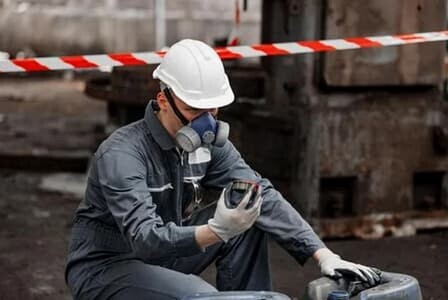
Personal Protective Equipment (PPE)
How Advanced Safety Can Help: Advanced Safety can help you design and implement effective risk controls that protect your workers and workplace.
Provide Information, Training, and Supervision
Workers must be told about the risks associated with hazardous substances and trained in safe handling and emergency procedures.
Solution: Advanced Safety offers training workshops that teach your workforce to handle hazardous substances safely and use protective measures effectively.
Emergency Preparedness
Businesses must develop emergency response plans for hazardous substance incidents, including spills, fires and exposures.
How Advanced Safety Can Help: Advanced Safety can help you create tailored emergency plans and run drills so your team is prepared for any scenario.
Comply with Storage and Signage Requirements
Hazardous substances must be stored safely in appropriate containers with clear, compliant signage.
Solution: Advanced Safety reviews your workplace storage systems and signs to check they comply with WorkSafe NZ requirements.
The Role of WorkSafe NZ
WorkSafe NZ oversees compliance with the Hazardous Substances Regulations and provides:
Guidance materials to help businesses understand their obligations.
Tools like the Hazardous Substances Calculator to simplify compliance.
Inspections and enforcement for non-compliance that can lead to fines or legal consequences.
Non-compliance with these regulations can expose businesses to significant risks, including:
Harm to workers and the public
Environmental damage
Legal penalties and financial loss
Reputational damage
Practical Steps for Compliance
These practical steps will help businesses comply with the Hazardous Substances Regulations 2017:
Conduct a Hazardous Substances Assessment: Identify all substances and assess their risks.
Develop and Maintain a Hazardous Substances Inventory: Keep accurate and up-to-date records.
Implement Controls: Put effective systems for storage, handling and risk management in place.
Train Your Workforce: Provide ongoing education on hazardous substance safety.
Prepare Emergency Plans: Develop and test emergency response plans for incidents.
Conduct Regular Audits: Review systems and practices regularly so you stay compliant.
How Advanced Safety Can Support Your Business
Advanced Safety makes compliance with the Hazardous Substances Regulations 2017 simpler with practical support tailored to your business. The services include:
Workplace Assessments: Identifying and classifying hazardous substances.
Inventory Development: Creating compliant inventories that meet WorkSafe NZ standards.
Risk Control Implementation: Designing and implementing effective safety measures.
Training Workshops: Educating your team on safe handling, storage and emergency response.
Emergency Preparedness Planning: Helping you develop solid plans to protect your workers and workplace.
Conclusion: Take Proactive Steps Toward Compliance
The Health and Safety at Work (Hazardous Substances) Regulations 2017 set a clear standard for managing hazardous substances in the workplace. Avoiding fines is part of it, however the real point of compliance is protecting your people, your business and the environment.
Hazardous Substances Rules Are Written for the Bad Day
One of the people I write about in my book Raise the Standard was a building supervisor who was talked through resetting a gas valve over the phone. It caused an explosion. He was burnt and alone for half an hour before help arrived.
His question afterwards was why the valves had no numbers and why there was no procedure sheet. That question took him into a career in safety. It's also the question the hazardous substances rules push you to answer before anything goes wrong: are your containers clearly labelled, is the information current and can people follow your emergency procedures under pressure?
The free Compliance Compass Self-Check is a quick way to see whether your controls work the way your system says they do.
Frequently Asked Questions About the Hazardous Substances Regulations
Do I need a hazardous substances inventory?
WorkSafe guidance says you must keep an inventory of the hazardous substances manufactured, used, handled or stored at your workplace, including hazardous waste. It needs to be accurate, up to date and readily accessible to emergency services.
Do I need a safety data sheet for every hazardous substance?
You need a safety data sheet from your supplier for each hazardous substance in your workplace. Workers and emergency services must be able to get to them easily.
Who enforces the hazardous substances regulations?
WorkSafe enforces the rules for hazardous substances at work under HSWA. The Environmental Protection Authority approves substances and sets rules for labels, safety data sheets, packaging and disposal under the HSNO Act.
About the Author

Matt Jones is the founder of Advanced Safety and a HASANZ-registered health and safety consultant. He's a Professional Member of NZISM and holds a Graduate Diploma in Occupational Safety and Health.
He created Compliance Compass, the independent audit Advanced Safety uses to show leaders what's actually happening on site against what the documents say. The thinking behind it sits in his book Raise the Standard: Why Good Organisations Go Blind and How Leaders Restore Visibility, built on three frameworks: G.A.P.E.™ finds where visibility is lost, S.A.F.E.T.Y.™ designs the leadership architecture that closes the gap and F.E.E.D.™ keeps it closed.
He also hosts the Health & Safety Unplugged podcast.
Keep reading
Compliance Compass
Does your health and safety system work the way it reads on paper?
Compliance Compass is an independent audit of your health and safety system, delivered in four weeks and assessed against ISO 45001 and the Health and Safety at Work Act 2015. You see what’s really happening on site and in the documents, with a clear view of what to fix first.
If you’re not ready for that yet, start with the free Compliance Compass Self-Check or browse the case studies.
Latest update: 5 November 2026