Quick answer
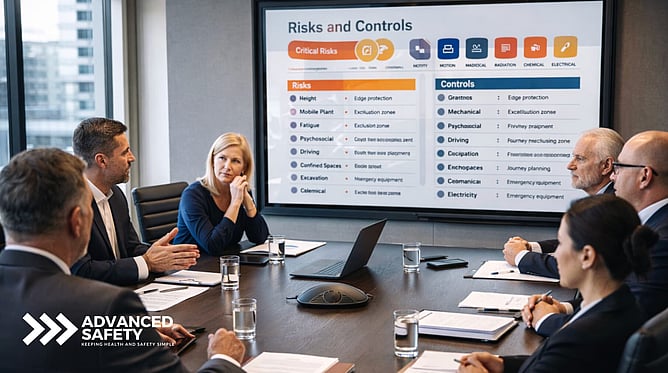
The Health and Safety at Work Amendment Act 2026 received Royal Assent on 9 July 2026 and most of it starts on 1 April 2027. It defines critical risk in law, lets small PCBUs focus their core duties on critical risks, ties officer due diligence to the governance role and treats following an eligible approved code of practice as compliance for that risk. For directors the practical change is evidence: being able to show the controls on your worst risks actually work.
The Health and Safety at Work Amendment Act 2026 is widely described as the most significant change to New Zealand workplace health and safety law since HSWA came into force in 2016 and most of what's been written about it so far comes from law firms. Those articles explain the legal mechanics well, however they rarely tell a director what to ask at the next board meeting or what the board should be able to see before 1 April 2027.
My view is simple enough to put in one line: the Act moves the test away from whether you have a system and toward whether you can show your worst risks are controlled. Everything below is about getting your business ready for that test, starting with what the Act actually says.
What Is the Health and Safety at Work Amendment Act 2026?
The Health and Safety at Work Amendment Act 2026 amends the Health and Safety at Work Act 2015 (HSWA), the WorkSafe New Zealand Act 2013 and the General Risk and Workplace Management Regulations 2016. It started life as the Health and Safety at Work Amendment Bill and you'll still see both names used for the same reform.
| Milestone | Date |
|---|---|
| Royal Assent, the Bill becomes the Amendment Act | 9 July 2026 |
| Most changes come into force | 1 April 2027 |
| WorkSafe guidance | Due before 1 April 2027, with some already published |
The original Bill proposed starting straight after Royal Assent, the select committee recommended 1 November 2026 and the Act as passed settled on 1 April 2027.
What Changes Under the Amendment Act on 1 April 2027?
The core of HSWA stays in place, including the primary duty of care, the "reasonably practicable" test and the principle of the highest level of protection. What changes is where the law points your attention.
| Area | Before 1 April 2027 | From 1 April 2027 |
|---|---|---|
| Critical risk | Not defined in the Act | Defined in law, with a new Schedule 1A of hazards that count automatically |
| Small PCBUs (fewer than 20 workers) | Same duties as every other PCBU | Core risk duties focus on managing and prioritising critical risks |
| Larger PCBUs | Manage all risks | Manage all risks and give critical risks the highest priority |
| Officers | Due diligence duty in section 44 | Section 44 clarified around understand, ensure and verify, applying to the officer role |
| Approved codes of practice | Can be used as evidence in court | Following an eligible approved code is treated as compliance for that risk (safe harbour) |
| Overlapping laws | HSWA duties sat alongside duties under other Acts | Meeting another Act's requirement for the same risk can count as meeting HSWA |
| Recreational land | Landowner duties could extend to recreational users | Generally no duty to recreational users, with exceptions |
What Counts as a Critical Risk Under the Amendment Act?
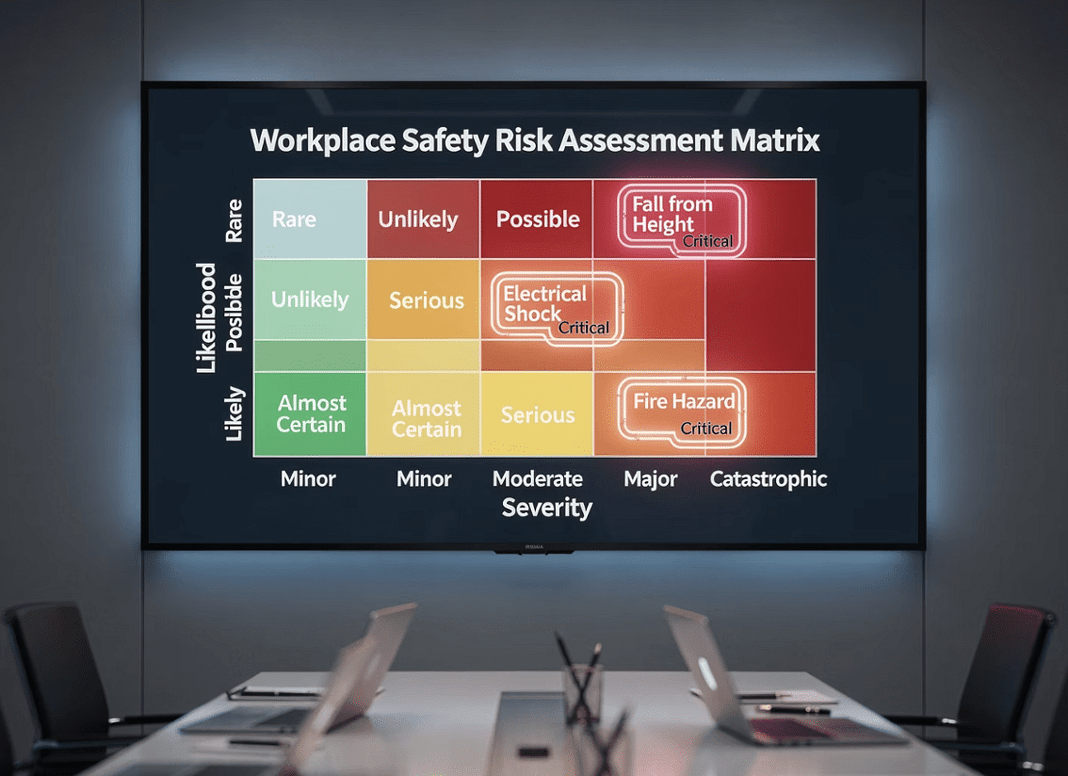
A critical risk under the amended Act is a risk linked to a hazard described in Schedule 1A or to any other hazard likely to result in death, a notifiable injury or illness, a notifiable incident or an occupational disease listed in Schedule 2 of the Accident Compensation Act 2001.
The word that catches people out is "likely". WorkSafe's guidance says it's about the chance that serious harm follows if something goes wrong, not how often you expect the event itself to happen. A driver on long rural runs who's never had a near miss still carries a critical risk if a fatigue crash would kill someone.
WorkSafe's summary of Schedule 1A lists 27 work types and hazards. Among them:
- Working at height, meaning any work where a person could fall more than 3 metres
- Scaffolding, excavations, cranes and lifting equipment
- Machinery and plant
- Hazardous substances, substances hazardous to health and asbestos
- Mining, quarrying, petroleum and major hazard facilities
- Remote or isolated work, workplace noise and raised objects that could fall
The full list is on WorkSafe's critical risk page. I've also written a full explainer on what a critical risk is under the Amendment Act.
Some common hazards aren't on Schedule 1A by name, including psychosocial harm, bullying, slips on level ground, fatigue and ergonomic strain. None of them disappear as risks and they become critical risks through the second part of the definition wherever they're likely to cause death, a notifiable injury or illness or a listed occupational disease.

Is My Business a Small PCBU Under the Amendment Act?
A small PCBU has fewer than 20 workers for at least nine months of the financial year. Anderson Lloyd puts roughly 97% of New Zealand businesses inside that line. For most owners reading this the answer is probably yes.
Count your workers carefully because HSWA's definition of a worker is wide and can take in contractors, subcontractors and labour hire people as well as your payroll staff. A business with 14 employees and eight regular contractors may not be small at all. Seasonal businesses need to look at the nine month test closely. The count is worth checking again every year and after any big change in your workforce.
Being small doesn't take you outside HSWA and a small PCBU still has to:
- Identify, manage and prioritise its critical risks
- Provide worker welfare facilities such as toilets, drinking water, hand washing, first aid and emergency planning
- Notify WorkSafe of notifiable events and keep the site undisturbed
- Engage with workers on health and safety
- Co-operate with other PCBUs on critical risks at shared workplaces
That last point matters for anyone working under a principal. Larger PCBUs keep their wider duty to consult, co-operate and coordinate with other PCBUs and they can set contract standards above the legal minimum. If you're a small contractor, expect your clients' prequalification and site rules to keep asking about more than critical risks. My post on upstream and downstream PCBUs covers how those shared duties work.
What Does the Amendment Act Change for Directors and Officers?
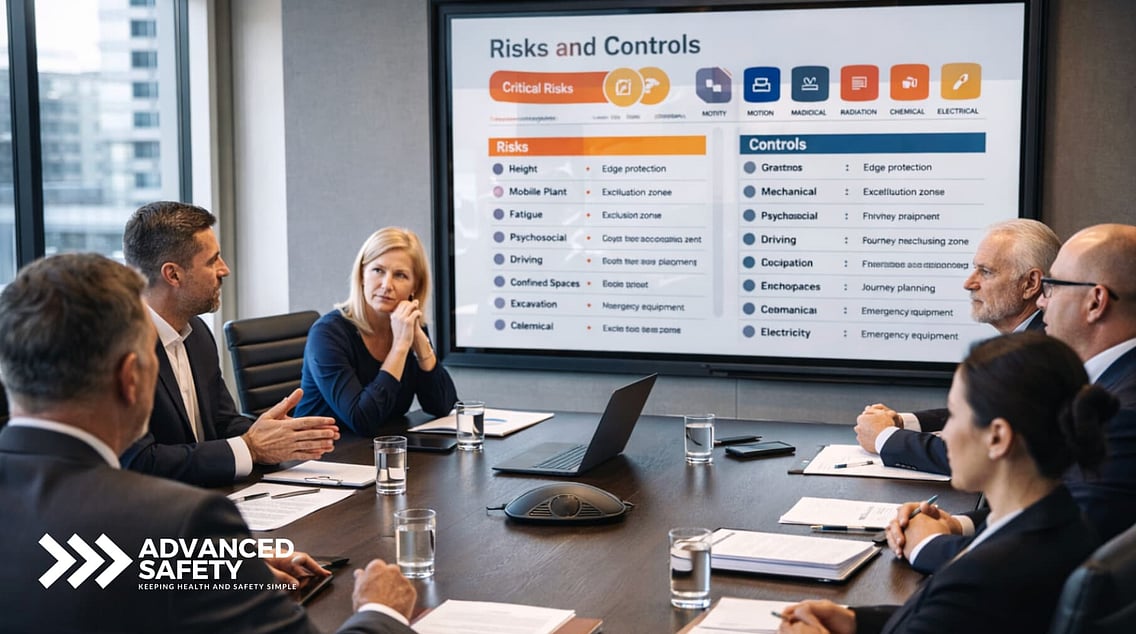
From 1 April 2027 section 44 sets out officer due diligence in three parts and makes clear it applies to what an officer does in their governance role, not to any other job they hold in the business.
- Understand: take reasonable steps to understand the PCBU's operations, the hazards and risks that come with them and the health and safety matters that relate to the business, then keep that knowledge current
- Ensure: take reasonable steps to make sure the PCBU has and uses the right resources and processes to manage its risks and can receive and respond to information about incidents, hazards and risks
- Verify: take reasonable steps to check those resources and processes are provided and actually used
The governance-only point helps owner-operators more than anyone. A managing director who also drives the digger on a Saturday is an officer at the board table and a worker on the machine. The officer duty now attaches only to the first of those roles. Write down which hat each director wears and when.
What the Act doesn't do is remove the need to verify. For directors of larger organisations the duty stays substantially the same. In Gibson v Maritime New Zealand [2026] NZHC 813 the High Court dismissed the appeal of Ports of Auckland's former chief executive against his conviction for failing to ensure and verify the controls around crane exclusion zones. The restated section 44 still asks officers to understand, ensure and verify. The habits missing in Gibson are exactly the ones the new wording measures. I've written up what the Gibson decision means for boards separately.
What Is the ACOP Safe Harbour in the Amendment Act?
From 1 April 2027 a PCBU that follows an applicable approved code of practice (ACOP) for a risk is treated as having met its duty for that risk. Following a code isn't compulsory, however it becomes the clearest way to show compliance where a code exists.
There are three limits worth knowing before you lean on it. The safe harbour covers codes approved under the amended regime plus certain existing codes the Act names. Other existing codes stay as evidence only. It only protects the risk the code actually covers. It also depends on you genuinely doing what the code says. That takes evidence, not a copy of the code in a folder.
From 1 April 2027 industry groups, unions and employer organisations can develop draft codes and submit them to WorkSafe for assessment and Ministerial approval. If your sector has no code for its biggest risk, it's worth asking your industry body whether one is being written.
What Else Changes in the Amendment Act?
- Overlapping laws: where another Act, such as the Building Act 2004, Maritime Transport Act 1994 or Land Transport Act 1998, sets a requirement for the same risk, meeting it can count as meeting HSWA within the limits of that provision. Check the other law genuinely covers the same risk before relying on it
- Recreational land: landowners generally owe no health and safety duty to recreational users, unless the activity is part of their business or work is happening at the same time and place
- WorkSafe's focus: its role is reprioritised toward guidance, codes of practice and critical risks, alongside monitoring and enforcement
What Should Directors Do Before the Amendment Act Starts?
Here's the order I'd work in between now and 1 April 2027:
- Confirm who your officers are, including anyone outside the board who has significant influence over the business
- Work out whether you're a small PCBU using the full worker definition and record how you counted
- List your critical risks against Schedule 1A and the consequences test, recording why anything was left off
- For each critical risk name the control that matters most and the person who owns it
- Decide how the board will verify those controls in the field, how often and on what evidence
- Check which ACOPs cover your work and whether what happens on site actually matches them
- Review contracts with principals and contractors for who manages what at shared sites
- Change the board report so it leads with critical risks and control checks, ahead of injury rates
None of this is wasted if the law shifts again. Every step above also helps you meet the current section 44 duty today.
Five Questions to Ask at Your Next Board Meeting
If you only take one thing into the boardroom, take these. They're the questions I'd expect a well-briefed director to be asking now:
- What are our critical risks under the new definition and who signed off that list?
- For our top three, what's the one control that stops someone being killed and when did someone last check it working on site?
- Are we a small PCBU once contractors are counted and are we sure?
- Which approved codes of practice apply to our work and can we show we follow them?
- What will our board report look like after 1 April 2027 and what will we stop reporting to make room?
If the answer to any of these is a long pause, you've found where to start. The free Officer Due Diligence Check takes you through the same ground.
What Do Businesses Get Wrong About the Amendment Act?
The biggest mistake I'm seeing already is reading the Act as deregulation. Small PCBUs hear "you only have to manage critical risks" and stop there, when they still have to find those risks first and keep their welfare, notification and engagement duties.
The other mistakes are quieter and just as costly. Businesses miscount their workers by leaving out contractors. They put a hazard in the "not critical" column without recording why. They treat an ACOP as a ceiling instead of the floor it is. Boards keep getting the same thick pack of injury rates and training percentages, when section 44 is asking them to verify that controls on the worst risks are used. The Act doesn't remove the exposure, it moves it into classification and proof.
Will the Amendment Act Survive the 2026 Election?
The honest answer is that nobody knows yet. During the third reading debate Labour's Jan Tinetti said Labour would repeal the Act. ACT has said it would oppose any repeal while in government. New Zealand First voted for the Bill and has said it wants to revisit parts of it after the election.
Preliminary results from the 7 November 2026 general election were close and the Electoral Commission is due to declare the official result on 27 November, once special votes are counted. Until a government is formed and sets out its plans, 1 April 2027 remains the date in law.
My advice for directors is the same whichever way it goes. Knowing your critical risks, owning the controls and verifying they work is what the current section 44 already expects. That preparation counts whatever the politics do. I'll update this post once the new government's position is clear.
What the Amendment Act Means for Board Reporting
In Raise the Standard I describe a pattern I see in boardrooms: boards drowning in data and starved of assurance. The pack gets thicker every quarter with lagging numbers, training percentages and audit scores and directors still can't say with confidence whether the controls on their worst risks are working.
The Health and Safety at Work Amendment Act 2026 makes that gap harder to live with. Once critical risk is defined in law and section 44 asks officers to verify that resources and processes are actually used, a board needs a short list of its critical risks, the control that matters for each one and evidence that someone has checked it in the field. If you want to test whether your board's picture matches what's happening on the ground, the free G.A.P.E. Self-Assessment takes you through what leaders believe, what the documents say, what people actually do and what you could prove.
Frequently Asked Questions About the Health and Safety at Work Amendment Act 2026
When does the Health and Safety at Work Amendment Act 2026 come into force?
Most of the Act comes into force on 1 April 2027. It received Royal Assent on 9 July 2026 after the start date was moved from 1 November 2026.
Is the Health and Safety Amendment Bill 2026 now law?
Yes, the Health and Safety at Work Amendment Bill passed and became the Health and Safety at Work Amendment Act 2026 on 9 July 2026. The two names refer to the same reform.
What is a small PCBU?
A small PCBU is a business with fewer than 20 workers for at least nine months of the financial year. The worker count can include contractors and subcontractors, not just employees. Count carefully before relying on it.
Do small PCBUs still have to manage risks that aren't critical?
Their core risk management duties focus on critical risks, however small PCBUs still have to identify those risks, provide welfare facilities, notify WorkSafe of notifiable events and engage with workers. Clients and principals can also require more through contracts.
What changes for directors under the Amendment Act?
Section 44 restates officer due diligence as understand, ensure and verify and applies it only to the governance role. For directors of larger organisations the duty stays substantially the same and they still have to take reasonable steps to check the business's controls are actually used.
Does following an approved code of practice guarantee compliance?
Following an applicable approved code of practice is treated as meeting your duty for the risk it covers, often called safe harbour. It only applies to codes approved under the new regime or named in the Act and only to the risk the code covers.
Will the Amendment Act be repealed after the 2026 election?
Nobody can say for certain until a government is formed. Labour said it would repeal the Act and the official election result is due on 27 November 2026. Until a new government changes the law, the Act starts on 1 April 2027.
What should a business do now to prepare for 1 April 2027?
Confirm your officers and whether you're a small PCBU, list your critical risks, name the key control and owner for each and set up a way for the board to verify those controls in the field.
Sources: WorkSafe, Understanding the changes to health and safety law; WorkSafe, What is a critical risk?; Simpson Grierson, Health and safety reform becomes law; Duncan Cotterill, Changes to health and safety law, 1 April 2027; Anderson Lloyd, Health and Safety at Work Amendment Act 2026; Electoral Commission, 2026 General Election preliminary results; RNZ via ODT, Health and safety overhaul passed, Labour says will repeal. This post is general guidance, not legal advice.
About the Author

Matt Jones is the founder of Advanced Safety and a HASANZ-registered health and safety consultant. He's a Professional Member of NZISM and holds a Graduate Diploma in Occupational Safety and Health.
He advises boards, directors and executives on officer due diligence and critical risk under the Health and Safety at Work Act 2015. His book Raise the Standard: Why Good Organisations Go Blind and How Leaders Restore Visibility sets out G.A.P.E.™, F.E.E.D.™ and S.A.F.E.T.Y.™, a leadership architecture framework for high-risk organisations.
He created the Compliance Compass audit and hosts the Health & Safety Unplugged podcast.
Keep reading
Governance Advisory
Is the health and safety report your board reads actually true?
Your officers carry a personal due diligence duty under the Health and Safety at Work Act 2015. Governance Advisory puts an independent view over your critical risk reporting every month and a short paper in front of your board every quarter, giving the people who sign off a true picture of what’s going on.
Start with the free Officer Due Diligence Check or read the Colliers Project Leaders case study.
Latest update: 8 November 2026