Totika: Streamlining Health and Safety Prequalification
Totika, properly written Tōtika, is New Zealand's shared standard for contractor health and safety prequalification. It was developed by Construction Health and Safety New Zealand (CHASNZ) so a contractor can be assessed once and have that result recognised by clients across the country, instead of filling in a different questionnaire for every one of them.
A Tōtika pass opens the door to tender, however a pass built on paperwork nobody uses won't protect your people once the work starts.
What Is Totika?
Tōtika sets one national benchmark for how contractors show their health and safety capability. You're assessed through one Tōtika member scheme and clients using another scheme can recognise the result. That saves you sending the same evidence in over and over again.
Why Was Totika Created?
Before Tōtika came along, contractors were repeating the same prequalification process for every client, each with its own expectations, platform and paperwork. That meant:
Extra cost from doing the same assessment again and again
Different safety benchmarks from one project to the next
Frustration for contractors and clients alike
Tōtika deals with that duplication by giving the industry one prequalification that's recognised nationally.
The Vision Behind Totika
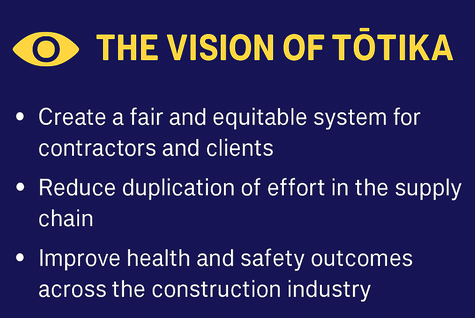
At its core Tōtika is about lifting health and safety right through the supply chain. Its objectives include:
Equity and consistency for every contractor
Less duplication of time, effort and cost
Better health and safety performance across construction and project delivery
How Does Totika Work?
Tōtika assessments run off one central framework and recognise certifications you may already hold, including:
ISO 45001: the international standard for health and safety management systems
SafePlus: WorkSafe's on-site performance improvement tool
Q-Safe: a recognised New Zealand contractor certification
In practice that means:
Certifications are cross-recognised
There's no need to duplicate effort if your business already meets an accepted standard
You get a clear roadmap to improve if you're not there yet
If you want a hand getting there, here's how I help with Tōtika prequalification.
Key Features of Totika
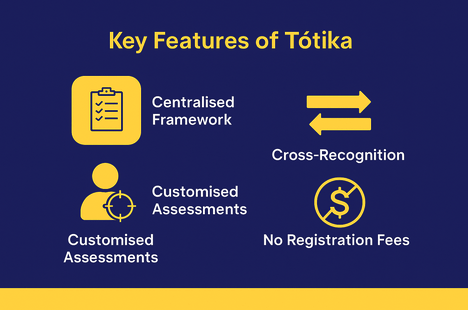
Central framework: one standard, recognised nationally
Certification recognition: existing qualifications like ISO 45001 count
Tailored assessments: questions match your size, scope and contract value
Free to register: Tōtika doesn't charge a registration fee
What Are the Benefits of Totika?
For Contractors
One assessment for multiple clients, with no more duplicate forms
Less time and admin for your team
Industry credibility that shows your health and safety maturity
Clear, practical feedback on where to improve
For Clients
Faster contractor selection: assess once, use many times
Consistent standards, with every contractor assessed to the same benchmark
Better due diligence through a transparent assessment framework
Lower compliance costs without weakening safety assurance
Totika in Action: First Rescue's Top Providers
First Rescue, owned by AMI, wanted its roadside and pick-up network to show a genuine commitment to health and safety. AMI chose its top-performing providers by revenue, size and output and backed them to meet the Tōtika standard.
Advanced Safety took those providers through the Safe365 Contractor Connect and Qualify365 platforms and every participating provider achieved Tōtika. That's what happens when the business engaging contractors sets the standard and supports them to reach it. You can read the First Rescue case study for the detail.
Getting Totika-Ready on a System You'll Keep Using
Advanced Safety doesn't write paperwork for a pass. The work starts with what's actually happening on your sites and the documents follow from there. What you submit is then something your crews already use every day.
I start with a Compliance Compass, a clear picture of where your health and safety system stands and what's really happening on site. You come away with the gaps in priority order and an honest view of the evidence you already hold.
Where you need hands on the ground to close those gaps, an Implementation Partner works alongside your team so the system behind your submission is one your people run after the assessor has gone.
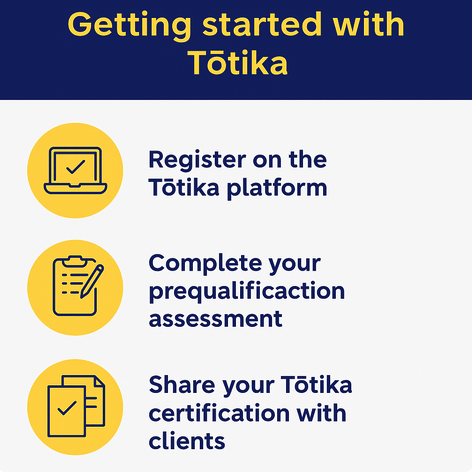
Getting Started with Totika
Here's how to get started with Tōtika:
Step 1: Register on the Tōtika website
Step 2: Select your contractor category and complete the questionnaire
Step 3: Submit your documentation and receive your result
Step 4: Share your certification with clients and stakeholders
If you're preparing a Tōtika submission and aren't sure where to start, book a strategy call with me. It runs up to 15 minutes and will point you to the right first step.
Engaging Contractors? Totika Is Only the Start
Prequalification looks at the documents a contractor can produce on the day. It can't tell you whether the toolbox talks happen, whether the risk assessment matches the job in front of the crew or whether anyone on site has read the safe work method statement.
WorkSafe's June 2026 guidance on the information needed before hiring contractors is clear on this: “Using a pre-qualification assessment doesn't mean your ongoing responsibilities to consult, cooperate and coordinate with other PCBUs are met.”
When did someone last check whether your prequalification questions tell you anything about how a contractor actually works? The Contractor Pre-qualification Reset reviews what you ask contractors for now, then redesigns it around risk. The contractors doing your highest-risk work get the closest look and low-risk suppliers aren't buried in paperwork.
Totika Through Qualify365
Qualify365 is Safe365's prequalification service and one of the member schemes Tōtika recognises. A Tōtika-aligned assessment through Qualify365 can be recognised by buyers across the Tōtika register and its questions are set out against the Tōtika supplier categories. The assessment still needs real evidence though. A platform can make the questions clearer, however it can't make a system work on site when it doesn't.
Common Totika Prequalification Mistakes
Over-documenting
Sending in a large pile of policies that nobody references, implements or evidences tends to work against a contractor. The Tōtika scheme rules ask assessors to take a reasonable approach with small businesses and say a small business can meet the core requirements without complex documented systems.
Under-evidencing
Good practice is happening on site but it never makes it into records, inspections, reviews or corrective actions and the assessor never gets to see it.
Misunderstanding the risk level
Tōtika places suppliers in categories by size, contract value and high-risk work. Applying a large-company system to a small low-risk operation puts you out of step with what the assessor expects for your category and so does a light system on very high-risk work.
Treating Totika as a tick-box
Assessors want to see a system that's actually used on site. A generic template bought online and lightly edited usually shows itself within a few questions.
More on Totika and Prequalification
For the full picture of how I help on both sides of the contractor list, see the Tōtika prequalification support page. The First Rescue case study shows what it looks like when a business sets the standard and backs its contractors to meet it.
What a Totika Result Measures and What It Doesn't
Early in my career the small building company I worked for was shortlisted for two national safety awards in the same year. I was new to safety and had very little technical depth, yet we cleared the bar within a year. Looking back, the bar was measuring effort and documentation, not capability.
Tōtika is a far better system than the fragmented one it replaced, however the same lesson applies. A prequalification result shows your system reads well against the framework. Only the work on site can show whether it holds up under pressure. I tell that story in full in Raise the Standard.
Before you start a Tōtika assessment, the free Compliance Compass Self-Check gives you an honest view of how your system works in practice.
Frequently Asked Questions About Totika
What is Totika prequalification?
Tōtika is New Zealand's health and safety prequalification scheme for contractors, developed by Construction Health and Safety New Zealand (CHASNZ). Contractors prequalify once and share the result with multiple clients.
Is Totika registration free?
Registering your business with Tōtika is free. Your assessment is completed through a Tōtika member scheme. Check that scheme's pricing before you start.
Does ISO 45001 count towards Totika?
Tōtika recognises existing certifications such as ISO 45001. A certified business doesn't have to repeat that work to prequalify.
Will Advanced Safety write our Totika documents for us?
Advanced Safety doesn't write paperwork for a pass. The work starts with what's actually happening on your sites and the documents follow from that and what you submit is something your team already uses.
Is Totika prequalification mandatory?
No, Tōtika isn't required by law in New Zealand. Many large organisations and councils ask for it as a condition of engagement though. For a lot of contractors that makes it a commercial requirement more than a legal one.
Why do some Totika submissions fail?
The usual reasons are too much irrelevant documentation, no evidence of how the system works in practice, controls that don't match the business's risk profile and the wrong Tōtika category. Most of these come down to how the system is shown, not whether the business can do the work safely. A supplier assessed as not yet meeting the standard gets information from the member scheme on how to improve for next time.
About the Author

Matt Jones is the founder of Advanced Safety and a HASANZ-registered health and safety consultant. He's a Professional Member of NZISM and holds a Graduate Diploma in Occupational Safety and Health.
He guides contractors through Tōtika prequalification and helps principals build contractor management that tests what happens on site, not just what's in the folder. He's the author of Raise the Standard: Why Good Organisations Go Blind and How Leaders Restore Visibility and hosts the Health & Safety Unplugged podcast.
He founded NZHSP and produces the Safety Summit.
Keep reading
Tōtika and contractors
Getting ready for Tōtika or engaging contractors who hold it?
A Tōtika pass opens the door to tender, however a pass built on paperwork nobody uses won’t protect your people once the work starts. Advanced Safety works with contractors and with the businesses that engage them, starting from what’s really happening on site.
Read the First Rescue Tōtika case study.
Latest update: 6 November 2026